
Corporate identity
The corporate identity
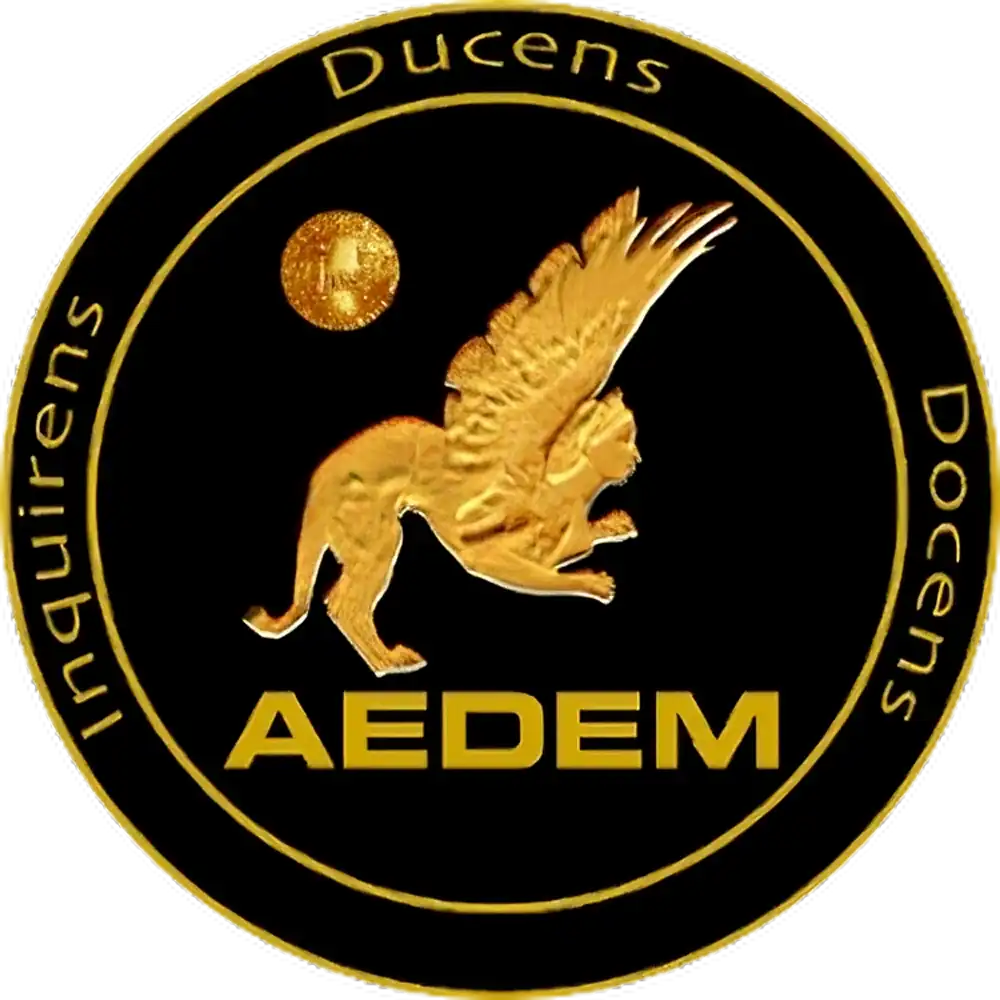
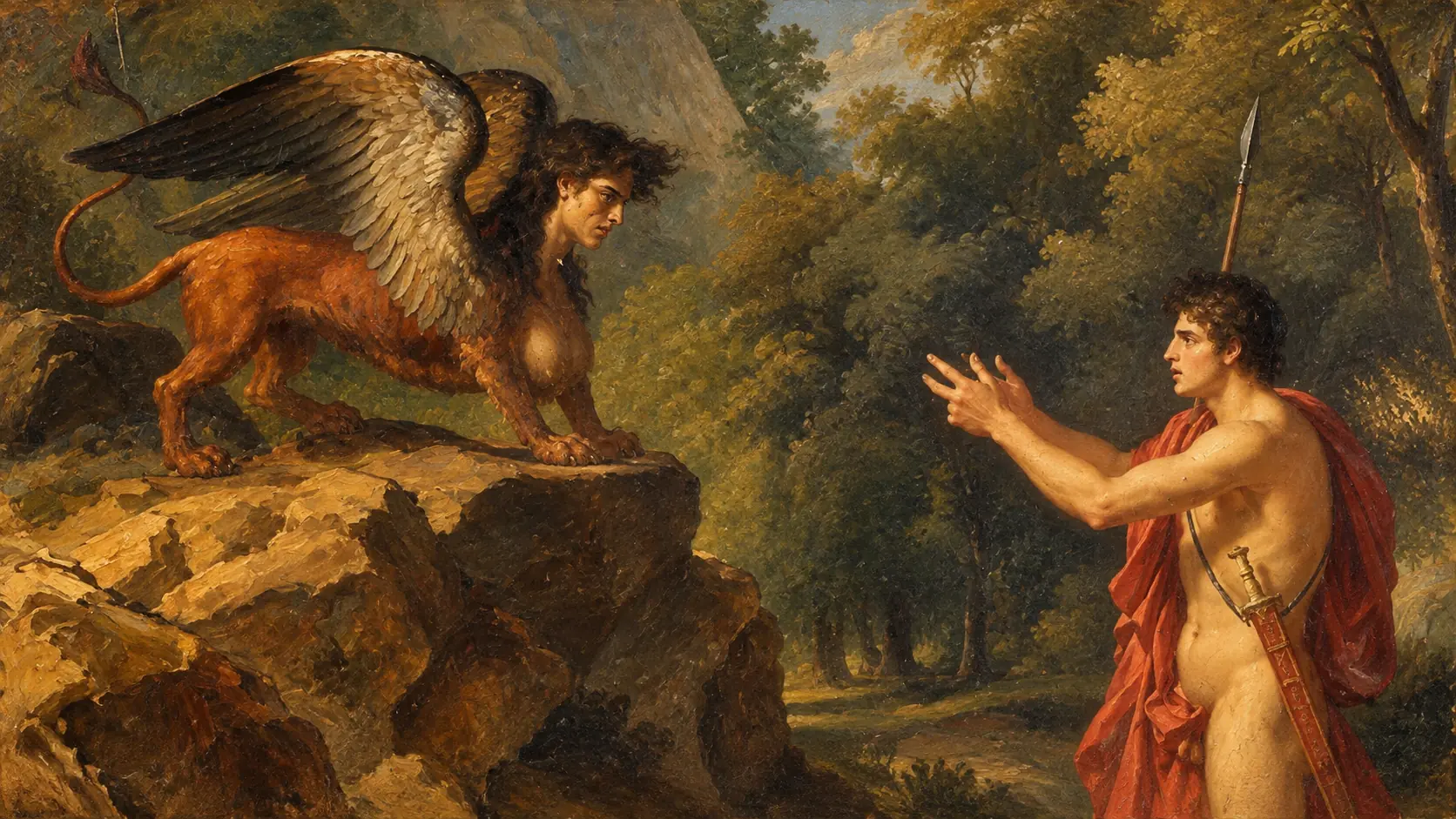
of the European Academy of Management and Business Economics (AEDEM) is made up of its name, in English, upon which rest two symbols contained within the same number of concentric circles. One of these symbols is allegorical, while the whole is linked to the essence and philosophy of the institution. Of the two elements, the animate one is a pictorial figure belonging to a painting that, in turn, immortalises a legend; while the other depicts an ancient coin. Around its perimeter, like a doctrine, the emblem is encircled by three Latin words related to teaching and research: Ducens, Docens and Inquirens.
Spanish Real, 16th c. The coin stands as the most primitive symbol embodying the idea of exchange and progress, a bridge and link in the blending of cultures, and a pivot for the interaction of knowledge and values between different societies, from antiquity to the present day. The coin is, without doubt, the element most associated with the economy. The choice of an ancient type of coin reinforces the image of one of the aspects most closely tied to universities around the world: knowledge rests on past knowledge, on that evolution upon the advancement that knowledge undergoes.
It is a Spanish Real
shown on its reverse, which circulated in our country and in other Spanish-speaking ones (such as Mexico, which also minted it) in the 16th century — specifically, and according to some studies, between 1516 and 1566 (the reign of Charles I). Two engraved inscriptions from the period can be seen: “hispania et india” and “plus”, all between two columns.

The mythological image, of Greek origin, belongs to the painting 'Oedipus and the Sphinx' (ca. 1806-1810), painted by Baron François-Xavier Fabre, and is currently exhibited in New York, at the Dahesh Museum of Art. The painting (oil) on canvas (19 ¾ x 26 in.) depicts the moment when the Sphinx (a beautiful monster with the head and torso of a woman, body of a lion, and wings of a bird) tests Oedipus, who, after answering three difficult riddles, will head to the Greek city of Thebes, the dream of any citizen of the time.
The harsh trials
that Oedipus must overcome come to represent the arduous journey every researcher has to complete in order to reach their goals. Oedipus's ignorance of what the future holds, the way he faces it and the final outcome of the legend can be likened to the emptiness and desolation that characterise any situation of bewilderment in a researcher caused by the absence of information — that is, the pernicious and traumatic influence of uncertainty on decision-making, a fundamental process within the framework of Business Economics.